

Project Management: Leading Organizations to Success
Program Overview — Project Management: Leading Organizations to Success
Project Management: Leading Organizations to Success is an eight-week online program from MIT xPRO designed for professionals seeking to lead projects with greater confidence, for organizational influence, and for lasting impact. Projects are the primary mechanism through which organizations execute strategy. However, as business and technology environments continue to evolve, project leadership increasingly requires a broader understanding of how projects operate within organizational systems. This requirement has pushed project leaders to manage more than timelines and deliverables. They must navigate cross-functional interdependencies, evaluate trade-offs, align stakeholders, and make informed decisions across the full project life cycle. This program builds the capabilities required to approach project leadership with greater discipline, informed decision-making, and organizational perspective.
The curriculum explores the full project life cycle, from initial strategy and project selection to planning, execution, risk management, and project conclusion, applying these concepts to real-world organizational contexts. You will examine project portfolios, corporate finance, agile and classical methodologies, budgeting, earned value management (EVM), risk management, and organizational and leadership frameworks that shape project success. Through applied case studies and structured learning, you will develop the ability to evaluate project decisions, manage interdependencies, align teams and stakeholders, and lead projects as part of a broader organizational system.
Key Takeaways
By the end of the program, you will possess an extensive understanding of the various phases of the project management life cycle.
Initial project strategy and conception: Choose and begin suitable projects for positive impact.
Project planning: Deconstruct the project into working parts, define scheduling, and develop a practical, executable plan.
Project execution: Assemble the right team, carry out the project according to the planning strategy, and keep to the schedule.
Risk management: Deal with unexpected opportunities and risks by adapting the project, preparing a plan B and mitigation strategies, and allowing for margins in time and resources.
Project conclusion: Leverage post-project assessment and organizational learning to adjust and reuse project management strategies in future projects.
Who Is the Project Management: Leading Organizations to Success Program For?
The program is designed for professionals looking to lead projects across evolving organizational and business environments, equipping them with practical frameworks to align teams, manage execution, and drive meaningful project outcomes. The program is ideal for:
Senior executives who are looking to evolve project organizations amid a continuously evolving business and technology environment
Mid-level to senior managers who want to acquire practical, readily applicable project management tools and the ability to set up successful teams
Team leaders across industries who are looking to strengthen their project management capabilities as part of a larger management team
Note: Although having prior project management experience is advisable, there are no prerequisites for this program.
Learning Journey
Additionally, you will be introduced to different case studies of both successful and unsuccessful projects that have had an impact on society. These case studies stem from various domains where projects are paramount for achieving success.
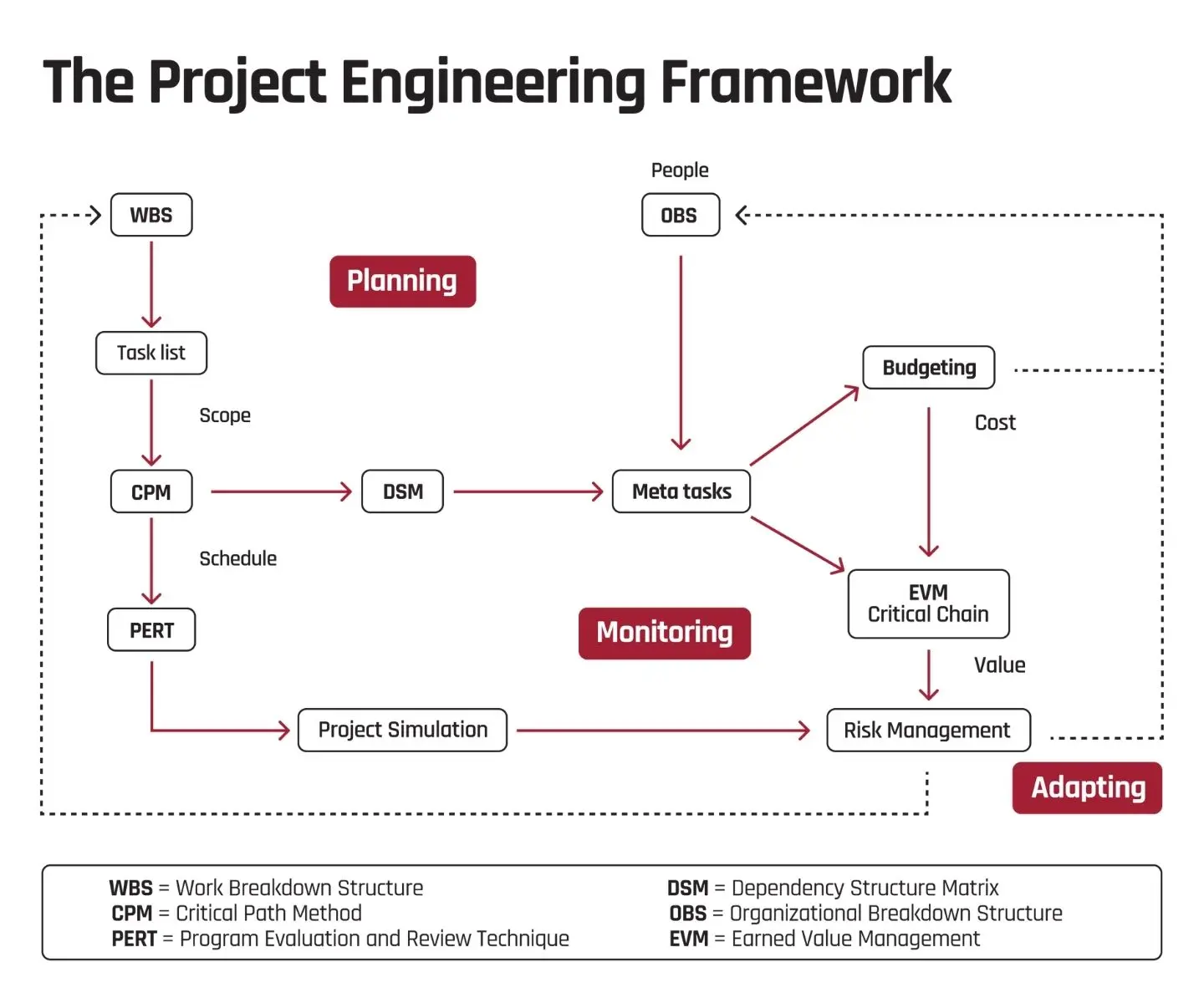
What Will You Learn in the Project Management: Leading Organizations to Success Program?
Module 1: Introduction to Project Management
Understand the definition of a project, explore valuable tools that will help you simulate and organize different projects, and learn more about recent and historic projects that have had a lasting impact on society.
Project Definition and History
Project Modeling
Project Management Framework
The Human Aspects of Projects
Case Studies and Examples
Module 2: Project Birth: Corporate Finance and Project Portfolios
Gain a better understanding of the corporate financial framework within which projects are born. Analyze the position of an organization and the different ways in which projects can be justified, and learn more about project portfolios and how they fit within an organization’s corporate strategy. Finally, recognize the value of projects and examine a case study from the consumer goods industry.
The Financial Impact of Projects
Case Study — The Journey to the Best Trash Bag Ever: ForceFlex
Project Portfolios
Evaluating the Value of a Project
An Organization’s Financial Posture
Module 3: Scheduling
Learn how to break projects down into work packages and tasks, define interdependencies between tasks, and identify the critical path within a project.
Gantt Charts
Work Breakdown Structure
Designing a Task List and Project Graph
Introduction to the Critical Path Method (CPM)
Finding the Critical Path
CPM Refinements
Module 4: Iterations and Rework
Explore how to build iterations into your project, create a design structure matrix (DSM), and analyze the relationships and dependencies between tasks. Additionally, learn how to simulate projects before approving and starting them.
Interdependent Tasks and Iterations
Introduction to the DSM
More on the DSM
Case Study: Applying the DSM to the DC HumLog Project
Module 5: Agile Projects
Identify the principal differences between the waterfall framework and the agile methodology. Learn about the benefits of the agile framework, and explore relevant examples and case studies.
The Agile Methodology
Tools for Agile Learning
Implementing Agile
Agile in Practice: Lessons from Industry
Case Study: Uber Eats
Module 6: Budgeting and Earned Value Management (EVM)
Understand how to create a credible project budget, track resource consumption and overall progress, and measure project performance through EVM.
Introduction to Budgeting and Tracking
Budgeting
Example Project Budgets and Plans
EVM
Module 7: Risk Management
Evaluate the meaning of risk within a project, learn how to identify risk, and create proper response plans. Grasp the fundamentals of the risk management framework and how they are applied to case studies in different fields.
Defining and Categorizing Risk
Identifying and Assessing Risk
Mitigating Risk
Case Studies
Module 8: Human and Organizational Aspects of Projects
Learn about different types of project leaders and how the project leadership framework can help with selecting, training, and assigning the right project managers. Also, analyze different kinds of project organizations and the organizational breakdown structure.
Introduction to the Myers-Briggs Type Indicator and Project Leadership
Developing Project Leadership
The Project Leadership Framework
Project and Team Organization
Program Highlights

An integrated perspective on project management across financial, organizational, leadership, and execution-related contexts

A certificate and 4.8 continuing education units (CEUs) from MIT xPRO

An eight-week online format designed for working professionals

Applied assignments and discussion forums

A curriculum that combines quantitative project management tools with organizational and leadership frameworks

Cross-industry case studies on project planning, execution, and leadership challenge
What Does the Program Consist Of?
The program curriculum is designed to maximize practicality through:
Multiple-choice activities
Interactive contents
Projects to be developed as a team, adding value to your experience
Action plan activities that are designed to apply what you have learned to your own organization
Video content taught by MIT faculty and experts from different industries
Live webinars to clear up doubts and discuss what you have learned
Additional recommended bibliography
What Past Learners Are Saying
Meet the Faculty

Olivier de Weck
Professor, Aeronautics and Astronautics and Engineering Systems, MIT
Olivier de Weck is the Apollo Program Professor of Astronautics and Engineering Systems at MIT. Weck earned degrees in Industrial Engineering from ETH Zurich and Aerospace Sys...
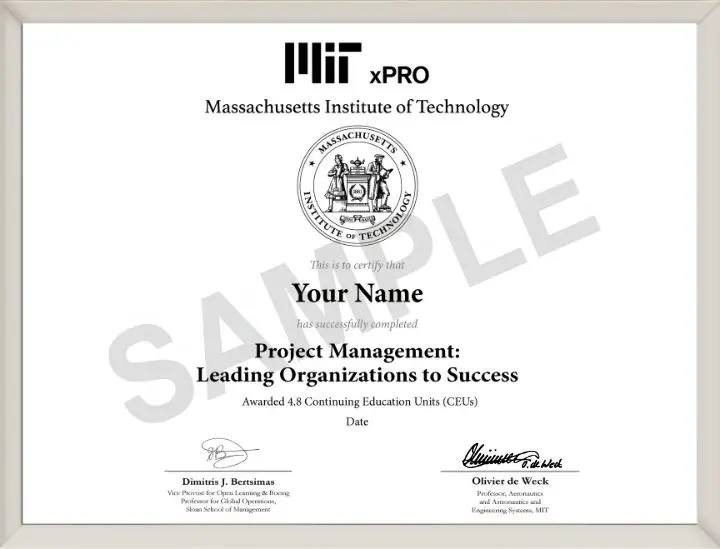
Certificate
Get recognized! Upon successful completion of this program, you will receive 4.8 CEUs, a globally recognized measure of professional learning that reflects compliance with international quality standards, and a certificate of completion from MIT xPRO.
This program is graded as a pass or fail; you must receive 70% to pass and obtain the certificate of completion.
Note: After successful completion of the program, your verified digital certificate will be emailed to you, at no additional cost, in the name you used when registering for the program. All certificate images are for illustrative purposes only and may be subject to change at the discretion of MIT xPRO.
FAQs
What is the Project Management: Leading Organizations to Success program from MIT xPRO?
The Project Management: Leading Organizations to Success program from MIT xPRO is an eight-week online project management program designed for professionals who want to strengthen their ability to lead projects across the full life cycle. This project management leadership program explores strategy, planning, execution, budgeting, risk management, and organizational leadership, helping you build practical project management skills to lead projects with greater structure, confidence, and organizational impact.
Is this project management course worth it?
This project management course is valuable for professionals who want to go beyond managing tasks and timelines to develop broader leadership skills in modern project environments. The program combines structured project management training, cross-industry case studies, and applied frameworks that help professionals strengthen decision making, improve outcomes, and build the expertise required for managing projects in complex organizations.
Who is this project management leadership program for?
This project management leadership program is designed for senior executives, mid-level to senior managers, team leaders, and project managers who want to strengthen their ability to lead projects in evolving business environments. It is particularly suited for professionals responsible for leading teams, coordinating cross-functional work, or expanding their capabilities in the project manager role through a structured executive program in project management.
What skills will I gain from this project management certificate program?
This project management certificate program helps you build practical project management skills across the full project life cycle. You will strengthen your ability to evaluate project opportunities, build schedules and budgets, manage risks, align stakeholders, and apply frameworks, including agile project management, EVM, and portfolio analysis. The program also helps develop critical leadership skills needed to guide project teams and improve organizational outcomes.
Does the program cover agile project management?
The curriculum of this project management course includes agile project management as part of a broader exploration of project delivery approaches. Participants will examine how agile methodologies compare with classical project management frameworks, understand their benefits and trade-offs, and learn how different approaches can support managing projects in dynamic environments. This program helps build practical project management leadership capabilities across a range of real-world project contexts.
Will I learn budgeting and financial tools in project management?
The program explores the financial dimensions of project management and introduces tools used to evaluate and manage project performance. You will learn how projects fit within a corporate financial framework and how to build credible budgets, track resource consumption, and apply quantitative tools, including EVM. This practical project management training helps strengthen decision making in financial and strategic project contexts.
Does this program cover risk management and project leadership?
The program curriculum addresses both project risk and leadership as essential components of successful project management and leadership programs. Participants will explore how to identify risks, develop response plans, prepare a plan B, and apply adaptive planning strategies while also examining leadership frameworks that support selecting and guiding effective project teams. This combination strengthens both project management skills and organizational leadership skills.
Is this project management training program technical?
This project management training program is not a technical engineering or software development course. Instead, it focuses on the strategic, financial, organizational, and leadership dimensions of managing projects, helping professionals understand the frameworks, tools, and decision-making approaches used in modern project management leadership programs. It is designed for professionals who want practical knowledge without requiring specialized technical expertise.
Does the program include hands-on learning and real-world case studies?
This program combines applied assignments, discussion forums, and cross-industry case studies to help translate concepts into practice. Through analysis of real-world projects and structured learning activities, participants will explore how project management frameworks apply in organizational settings. This applied format helps strengthen practical skills, build knowledge, and improve one’s ability to lead projects with confidence.
How much does the program cost?
The course fee and full program details are listed on the official program page. The fee includes access to program materials, structured online courses content, learning resources, and support throughout the eight-week experience. For the latest details on tuition, enrollment timelines, and program access, please refer to the official website.
What are the seven stages of project management?
The seven stages of project management generally include project initiation, planning, scheduling, execution, monitoring, risk management, and project closure. Effective project managers ensure projects move through each stage with clear objectives, structured oversight, and coordinated execution. This project management program explores the full project life cycle in depth, helping you build the skills needed to manage projects from initial strategy through successful conclusion.
What is the best training for project management?
The best training for project management course depends on your goals, experience level, and the type of projects you lead. A strong project management training program should go beyond task management to build strategic thinking, financial understanding, risk management, and leadership skills. Programs, including MIT xPRO’s executive program in project management, are designed to help professionals like you strengthen your practical project management skills while learning how to lead projects within broader organizational systems.
What is the difference between project management programs and the Project Management Professional (PMP) exam preparation?
A project management program typically focuses on building practical leadership, strategic decision-making, and applied project management skills across real-world business contexts. In contrast, PMP exam or PMP certificate exam preparation is specifically designed to help learners prepare for the standardized exam associated with PMP pathways. This program focuses on applied learning, organizational leadership, and practical project execution rather than serving as an exam prep or prep course.
Can this project management program help experienced project managers strengthen leadership skills?
Yes, this program is designed to help experienced project managers expand beyond execution-focused responsibilities and strengthen broader leadership skills. Participants will explore frameworks related to organizational design, stakeholder alignment, risk management, and leading teams, developing a more strategic perspective on the project manager role and improving their ability to lead projects with organizational impact.
How can project management training improve career growth?
Strong project management training can help professionals build practical skills, deepen their expertise, and strengthen their ability to lead complex initiatives across industries. Developing structured project management skills can improve performance in an individual’s current role, support long-term career growth, and prepare oneself for expanded responsibilities in project leadership, program management, or cross-functional business roles. Continuous learning in project management courses can also help professionals stay relevant in an evolving business environment where project leadership remains in high demand.
How does Emeritus support accessibility for learners?
Emeritus is committed to making high-quality education accessible and affordable to individuals, companies, and governments around the world. If you have questions about accessibility or would like to discuss available support options before enrolling, please contact accessibility@emeritus.org. For more information about our accessibility practices, please review our Accessibility Policy here.
Financing Options
Climb Credit*
We offer financing options with our partner, Climb Credit*. Click here to learn more.
Flexible Payment Options For All
Flexible payment options allow you to pay the program fee in installments. Click here to see payment schedule.
Didn't find what you were looking for? Write to us at learner.success@emeritus.org or Schedule a call with one of our Academic Advisors or call us at +1 401 443 9591 (US) / + 44 189 236 2347 (UK) / +65 3129 7174 (SG)
Flexible payment options available.
Starts On